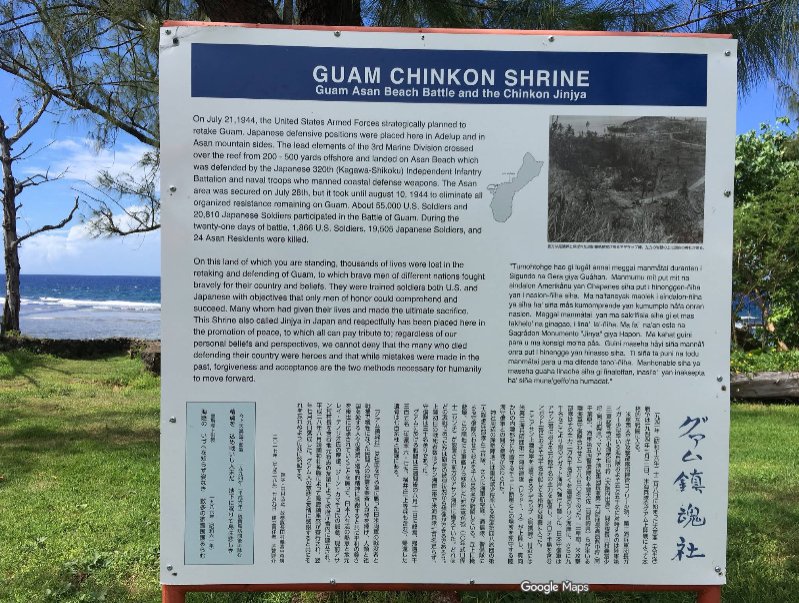






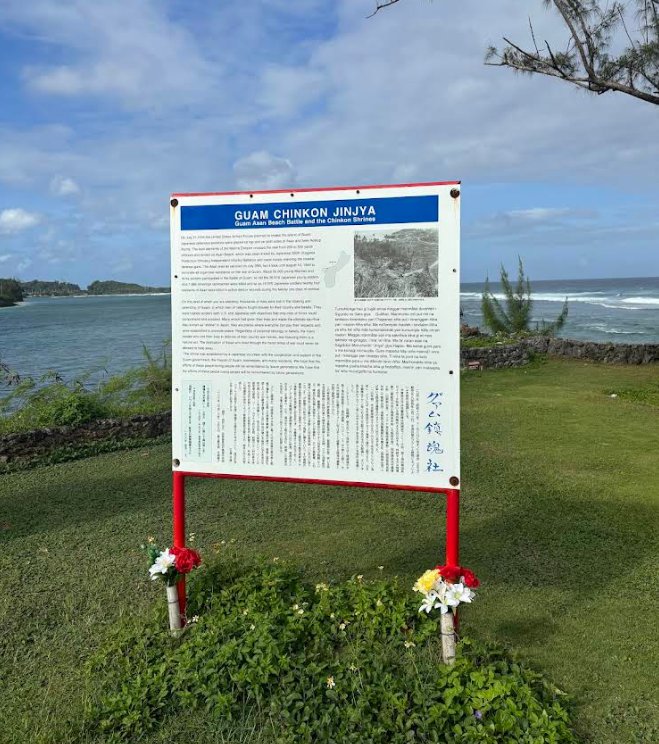
Guam Asan Beach Battle and the Chinkon Jinjya Information Panel
<< Back to Guam-Ricardo J. Bordallo Governor's Complex (Adelup Point)
Details:
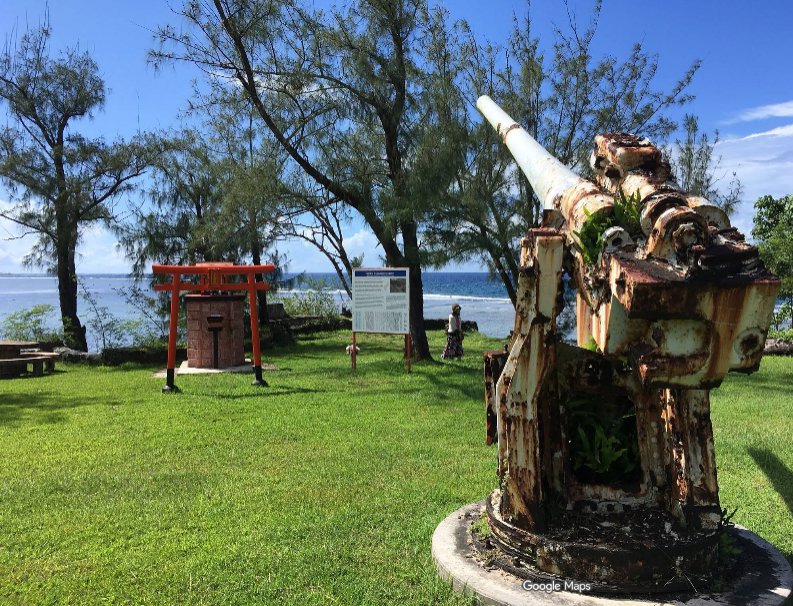
Next to the Shinto torii gate.
MarkerA rectangular interpretive panel mounted on metal posts provides historical information about the Battle of Guam, honors those who fought and lost their lives during the conflict, and describes the history and significance of the shrine. The information is presented in English, Japanese, and Chamorro.
Monument Text:
GUAM CHINKON SHRINE
Guam Asan Beach Battle and the Chinkon Jinjya
First column text:
On July 21,1944, the United States Armed Forces strategically planned to retake Guam. Japanese defensive positions were placed here in Adelup and in Asan mountain sides. The lead elements of the 3rd Marine Division crossed over the reef from 200 - 500 yards offshore and landed on Asan Beach which was defended by the Japanese 320th (Kagawa-Shikoku) Independent Infantry Battalion and naval troops who manned coastal defense weapons. The Asan area was secured on July 28th, but it took until august 10, 1944 to eliminate all organized resistance remaining on Guam. About 55,000 U.S. Soldiers and 20,810 Japanese Soldiers participated in the Battle of Guam. During the twenty-one days of battle, 1,866 U.S. Soldiers, 19,505 Japanese Soldiers, and 24 Asan Residents were killed.
On this land of which you are standing, thousands of lives were lost in the retaking and defending of Guam, to which brave men of different nations fought bravely for their country and beliefs. They were trained soldiers both U.S. and Japanese with objectives that only men of honor could comprehend and succeed. Many whom had given their lives and made the ultimate sacrifice. This Shrine also called Jinjya in Japan and respectfully has been placed here in the promotion of peace, to which all can pay tribute to; regardless of our personal beliefs and perspectives, we cannot deny that the many who died defending their country were heroes and that while mistakes were made in the past, forgiveness and acceptance are the two methods necessary for humanity to move forward.
Second column text:
"Tumohtohge hao gi lugåt annai meggai manmåtai duranten i Sigundo na Gera giya Guåhan. Manmumu mit put mit na sindalon Amerikånu yan Chapanes siha put i hinenggen-ñiha yan i nasion-ñiha siha. Ma na'faneyak maolek i sindalon-ñiha ya siha ha' sina mås kumomprende yan kumumple hafa onra nasion. Meggai manmåtai yan ma sakrifisia siha gi et mas takhelo' na ginagao, i lina' la'-ñiha. Ma fa' na'an este na Sagrådon Monumento "Jinya" giya Hapon. Ma kahat guini para u ma konsigi mo'na pas. Guini maseha håyi siña manna'i onra put i hinengge yan hinasso siha. Ti siña ta puni na todu manmåtai para u ma difende tano'-ñiha. Manhonable siha ya maseha guaha linache siha gi finaloffan, inasie' yan inaksepta ha' siña muna'geffo'na humadat."