





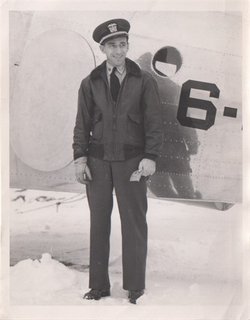
Wilford John 'Bud' Willy is honored on the following 3 monument(s) in our database:
Lt Joseph Kennedy Fortress of Mimoyecques Memorial
Norfolk and Suffolk Aviation Museum
Lt Joseph Kennedy & Lt Wilford Willy Operation Anvil Plane Explosion Plaque
He was killed with Lieutenant Joseph Patrick Kennedy,Jr * in Operation Aphrodite which employed unmanned, explosive–laden Boeing B-17 Flying Fortress and B-24 Liberator bombers. These aircraft were deliberately crashed into their targets under radio control. They could not take off on their own, so a crew of two would fly to 2,000 feet before activating the remote control system, arming the detonators and parachuting from the aircraft.
After U.S. Army Air Forces operation missions were drawn up on July 23, 1944, Kennedy and Lieutenant Wilford John Willy were designated as the first Navy flight crew. Willy had "pulled rank" over Ensign James Simpson (who was Kennedy's regular co-pilot) to be on the mission. They flew a BQ-8 "robot" aircraft (a converted B-24 Liberator) for the U.S. Navy's first Aphrodite mission. Two Lockheed Ventura mother planes and a Boeing B-17 navigation plane took off from RAF Fersfield at 1800 on 12 August 1944. Then the BQ-8 aircraft, loaded with 21,170 lb of Torpex, took off. It was to be used against the Fortress of Mimoyecques,a hillside German munitions site in northern France, housing their V3 supergun.Following behind them in a USAAF F-8 Mosquito to film the mission were pilot Lieutenant Robert A. Tunnel and combat camera man Lieutenant David J. McCarthy who filmed the event from the perspex nose. As planned, Kennedy and Willy remained aboard as the BQ-8 completed its first remote-controlled turn at 2,000 feet near the North Sea coast. Kennedy and Willy removed the safety pin arming the explosive package and Kennedy radioed the agreed code "Spade Flush", his last words.Two minutes later (and well before the planned crew bailout, near RAF Manston in Kent), the Torpex explosive detonated prematurely and destroyed the Liberator, killing Kennedy and Willy instantly. Wreckage landed near the village of Blythburgh in Suffolk, England, causing widespread damage and small fires, but no injuries on the ground. According to one report, a total of 59 buildings were damaged in a nearby coastal town.
* U.S. Navy ~ United States Naval Reserve;
Service # O-116667
[Navy Cross, Distinguished Flying Cross, Air Medal]
Navy Cross Citation
The President of the United States of America takes pride in presenting the Navy Cross (Posthumously) to Lieutenant Wilford John Willy (NSN: 0-137078), United States Navy, for extraordinary heroism in operations against the enemy while serving as Co-Pilot of a Navy Liberator Patrol Plane in Bombing Squadron ONE HUNDRED TEN (VB-110), Special Air Unit ONE (Europe), during a special air mission directed at Mimoyecques, France, on 12 August 1944. Well knowing the extreme dangers involved and totally unconcerned for his own safety, Lieutenant Kennedy unhesitatingly volunteered to conduct an exceptionally hazardous and special operational mission. Intrepid and daring in his tactics and with unwavering confidence in the vital importance of his task, he willingly risked his life in the supreme measure of service, and, by his great personal valor and fortitude in carrying out a perilous undertaking, sustained and enhanced the finest traditions of the United States Naval Service.
A cenotaph remembers him at Greenwood Memorial Park and Mausoleum
Fort Worth, Tarrant County, Texas,
Plot: Memory Lawn Section 2B
Source: Find a Grave