






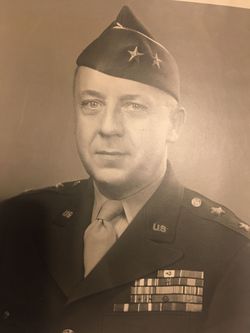
Willard Stewart Paul is honored on the following 1 monument(s) in our database:
February 28, 1894 Willard Stewart Paul was born in Worcester, Massachusetts. He attended Clark University in Dartmouth, Massachusetts, and American University in Washington, D.C. In 1916 Paul joined the Colorado Army National Guard as a second lieutenant in the Field Artillery Branch to serve on the Mexican border during the Pancho Villa Expedition. He received a commission in the Regular Army in 1917. During World War I he served at Camp Merritt, New Jersey. Paul, remained in the army during the interwar years, graduated from the Infantry School, Officers Course in 1921. From 1922 to 1924 he was assistant professor of military science for the Reserve Officer Training Corps program at Johns Hopkins University, from which he received a bachelor of science degree in 1924. Paul was an instructor at the U.S. Army Infantry School from 1930 to 1933. He graduated from the U.S. Army Command and General Staff School in 1935, and the U.S. Army War College in 1937. He was assigned to the staff of the Adjutant General's Department, 1937 to 1941, and in 1942 he received a master of arts degree from the American University. In 1942, Paul was assigned as Deputy Chief of Staff for Logistics, as a G-4 staff officer with Headquarters Army Ground Forces, receiving promotion to the two-star general officer rank of major general. In April 1943 he was made the first Commanding General of the 75th Infantry Division during its stateside training. In August he assumed command of the 26th Infantry Division. Paul led the 26th in numerous training exercises in the United States and was to command the division for the rest of the war. Paul led the 26th Division overseas to the Western Front in late August 1944. The 26th Division's first major action of the war was during the Battle of the Bulge towards the end of the year where it played an important role in the counterattack by Lieutenant General George Patton's Third Army. Earning praise from Patton, the 26th took part in the Western Allied invasion of Germany in March 1945 until the end of World War II in Europe in May. After the war Paul remained in Europe as Deputy Chief of Staff for Personnel, G-1, at Supreme Headquarters Allied Expeditionary Force (SHAEF). In 1947 Paul was promoted to lieutenant general and returned to the United States as the army's Assistant Chief of Staff for Personnel, G-1, where he served until his 1948 retirement. As the army's top personnel officer, he was responsible for its post-war manpower demobilization. Paul's decorations included two awards of the Army Distinguished Service Medal and the Legion of Merit. Following his retirement from the military he was a consultant for the American Red Cross, Assistant Director of the Office of Defense Mobilization, and a member of the subcommittee set up by the Hoover Commission to study personnel issues in the Department of Defense. Paul also served as President of the Retired Officers Association. In 1956 he became President of Gettysburg College, where he remained until his 1961 retirement. Lieutenant General Willard Paul died at Walter Reed Army Hospital on March 21, 1966.