






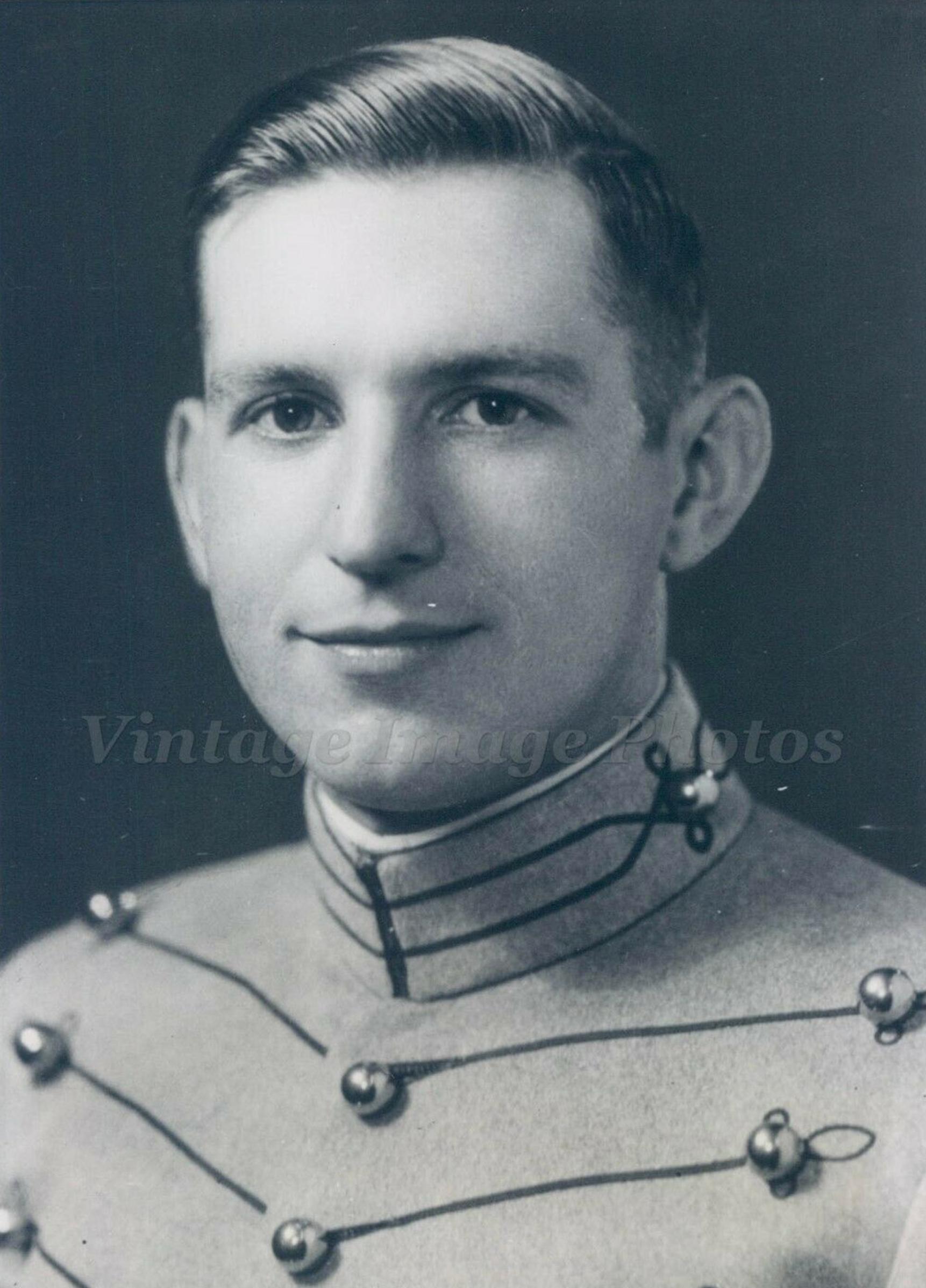
Frederick Adam Miller is honored on the following 1 monument(s) in our database:
Frederick Adam Miller was born on October 19, 1913, in Jerseyville, Jersey County, Illinois. He was the son of Floyd R. Miller and Charlotte E. Jacobs Miller. He was married to June Eileen Ringhausen Davis. He graduated from Jerseyville Township High School and attended Illinois College before receiving an appointment to the U.S. Military Academy at West Point from Illinois’s 20th Congressional District in 1934. He graduated on June 14, 1938, and was commissioned into the Coast Artillery Corps, assigned to the 14th Coast Artillery at Fort Worden, Washington.
On February 28, 1939, Fred departed San Francisco for Fort Mills, Corregidor, Philippines, where he joined the 92nd Coast Artillery (Philippine Scouts). Later, he transferred to the Guard Battalion, responsible for overseeing Bilibid prisoners confined in Corregidor’s stockade. Fred’s role in the Guard Battalion on Corregidor was demanding and multifaceted. Beyond overseeing his own soldiers, he was responsible for managing hundreds of civilian prisoners, training his Scout troops in gunnery, discipline, and prisoner-handling procedures. Despite the workload, he organized athletic programs for both soldiers and prisoners, producing some of the best teams on the island. To enhance prisoner welfare, Fred initiated projects to raise funds for better food and recreation, personally dedicating time to their success. His routine included frequent night inspections and continuous administrative responsibilities.
In early 1941, Fred was ordered to return to the United States and had already packed and loaded his belongings aboard the U.S.A.T. Etolin. When it was announced that officers’ travel had been canceled, and only dependents would depart. Due to the expansion of military units in the Philippines, Fred was appointed Post School and Recreation Officer, a challenging role for a First Lieutenant. He was tasked with improving morale among recruits, expanding recreation facilities, and overseeing the construction of a new theater and bowling alley. Later that year, radio orders directed his return to the United States upon completion of his foreign service. Expecting to depart in December 1941, Fred took a ten-day trip to the Mountain Provinces, visiting Baguio, Bontoc, and the Banaue rice terraces, where he filmed local life and scenery. Upon returning to Corregidor, he learned he had been promoted to temporary Captain on October 11, 1941. The attack on Pearl Harbor abruptly canceled Fred’s return to the U.S., keeping him in the Philippines as the war began. He was transferred to the 60th Coast Artillery (Anti-Aircraft) and took command of Battery “A,” a searchlight unit positioned across southern Bataan. Operating under severe shortages, half rations, limited fuel, and rampant malaria, Fred nonetheless fulfilled his mission, effectively illuminating enemy aircraft during night raids.
When Bataan fell, orders came to evacuate to Corregidor. Despite chaotic conditions and limited transport, Fred safely evacuated all his men, destroying his remaining equipment before departure. After regrouping his men amid the bombed ruins of Middleside Barracks, Fred’s unit was assigned to reactivate Battery Way, a four-mortar, 12-inch coastal battery under Major William Massello’s command. Despite being under constant bombardment and visible to enemy observers from Bataan, Fred successfully trained his searchlight crew to operate the heavy mortars within days.
On the night of May 5, 1942, during the Japanese assault on Corregidor, Battery Way was the only remaining artillery position capable of targeting the invading forces. Throughout the night, Fred and his men fired relentlessly, even as enemy shells destroyed their mortars one by one and Major Massello was critically wounded. Taking command, Fred continued firing until only one gun remained, operating it until its breech overheated and jammed after continuous firing. By May 6, 1942, with the last mortar silenced, his exhausted men had fought to the very end, forced to surrender only when further resistance became impossible.
In the weeks following the fall of Corregidor, Fred endured captivity where he was placed in charge of a 100-man mixed group of Army, Navy, and Marine personnel, a difficult leadership role requiring him to organize shelter, gather containers for water, and prepare makeshift meals over open fires. Later, the prisoners were transferred from Corregidor to Bilibid Prison in Manila, then to Cabanatuan, where Fred was assigned to Camp No. 2. In October 1944, Fred was among roughly 1,800 American POWs loaded onto a Japanese transport ship bound north. The vessel was sunk in the South China Sea, claiming his life.
Cpt Miller's name is memorialized in the Tablets of the Missing in the Manila American Cemetery and Memorial, Manila, Capital District, National Capital Region, Philippines. He also has a cenotaph in the Oak Grove Cemetery, Jerseyville, Jersey County, Illinois, USA. In his memory, his wife commissioned a memorial on the campus of Illinois College in Jacksonville, Illinois, to honor and preserve his legacy.
Source of information: www.findagrave.com, alumni.westpointaog.org, weremember.abmc.gov