





Richard Albert Smith is honored on the following 1 monument(s) in our database:
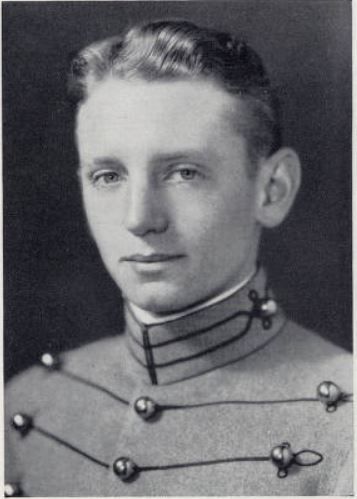
Richard Albert Smith was born on August 7, 1911, in Dubuque County, Iowa. He was the son of Albert Hugo Smith and Lola Lichtenberger Smith. He was married to Katherine Marie Wilson. After graduating from Dubuque High School, he attended the University of Iowa for a year as a member of Delta Upsilon Fraternity. He entered the U.S. Military Academy at West Point in 1930 and graduated in 1934, choosing the Cavalry as his branch of service. From 1934 to 1937, Richard “Dick” Smith served as a platoon leader in Troop B, 12th Cavalry at Fort Brown, Brownsville, Texas. During this time, he earned the Teddy Roosevelt Award for Cavalry Leadership, recognizing his outstanding leadership of a small unit. He attended the Cavalry School at Fort Riley, Kansas (1938–1939), completing the Regular Course before briefly serving as Commander of the Special Weapons (Machine Gun) Troop, 2nd Cavalry. Seeking broader experience, he later received orders for overseas duty in the Philippines.
Smith arrived in the Philippines in February 1940, where he served as a battery commander with the 91st Coast Artillery on Corregidor, overseeing mine operations and 155 mm guns. He was promoted to Captain in September 1940. When Corregidor fell on May 6, 1942, he was captured along with the surviving American troops. The Japanese separated the Filipino and American prisoners, transporting Smith and others by ship to Manila, where they were paraded through the city before being confined in Bilibid Prison. Soon after, they were crammed into boxcars and sent to the Cabanatuan POW camp. He endured two and a half years of captivity at Cabanatuan Prison Camp No. 1 in the Philippines. During this time, he served as commissary officer for Prisoner of War Group II.
By late 1944, as General MacArthur’s forces advanced, the Japanese began transferring surviving prisoners from the Philippines to Japan to prevent their liberation. Though severely weakened, Cpt Smith was among those deemed fit enough for transport. In October 1944, he was moved from Cabanatuan Camp No. 1 to Bilibid Prison in Manila to await shipment. On December 13, 1944, he was forced aboard the Oryoku Maru, the first of three infamous Japanese “Hell Ships.” When American planes unknowingly bombed the unmarked vessel off Subic Bay, hundreds were killed, but Smith survived and swam to shore. He and the other survivors endured days of starvation and exposure before being moved to the Enoura Maru, where disease and malnutrition claimed many more lives. After the ship was bombed at Takao, Formosa, Smith was transferred to the Brazil Maru, the final leg of his ordeal. Amid freezing weather, starvation, and sickness, he died of pneumonia on January 27, 1945.
Cpt Smith's name is memorialized in the Tablets of the Missing in the Manila American Cemetery and Memorial, Manila, Capital District, National Capital Region, Philippines.
Source of information: www.findagrave.com, alumni.westpointaog.org, weremember.abmc.gov