





American POW Cemetery - War of 1812
Details:
Behind cell block 4, beyond the original prison walls. Note that the American Cemetery at Dartmoor Prison does NOT have public access, as it stands within the limits of the modern-day convict prison.
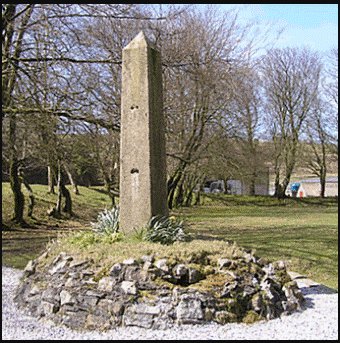
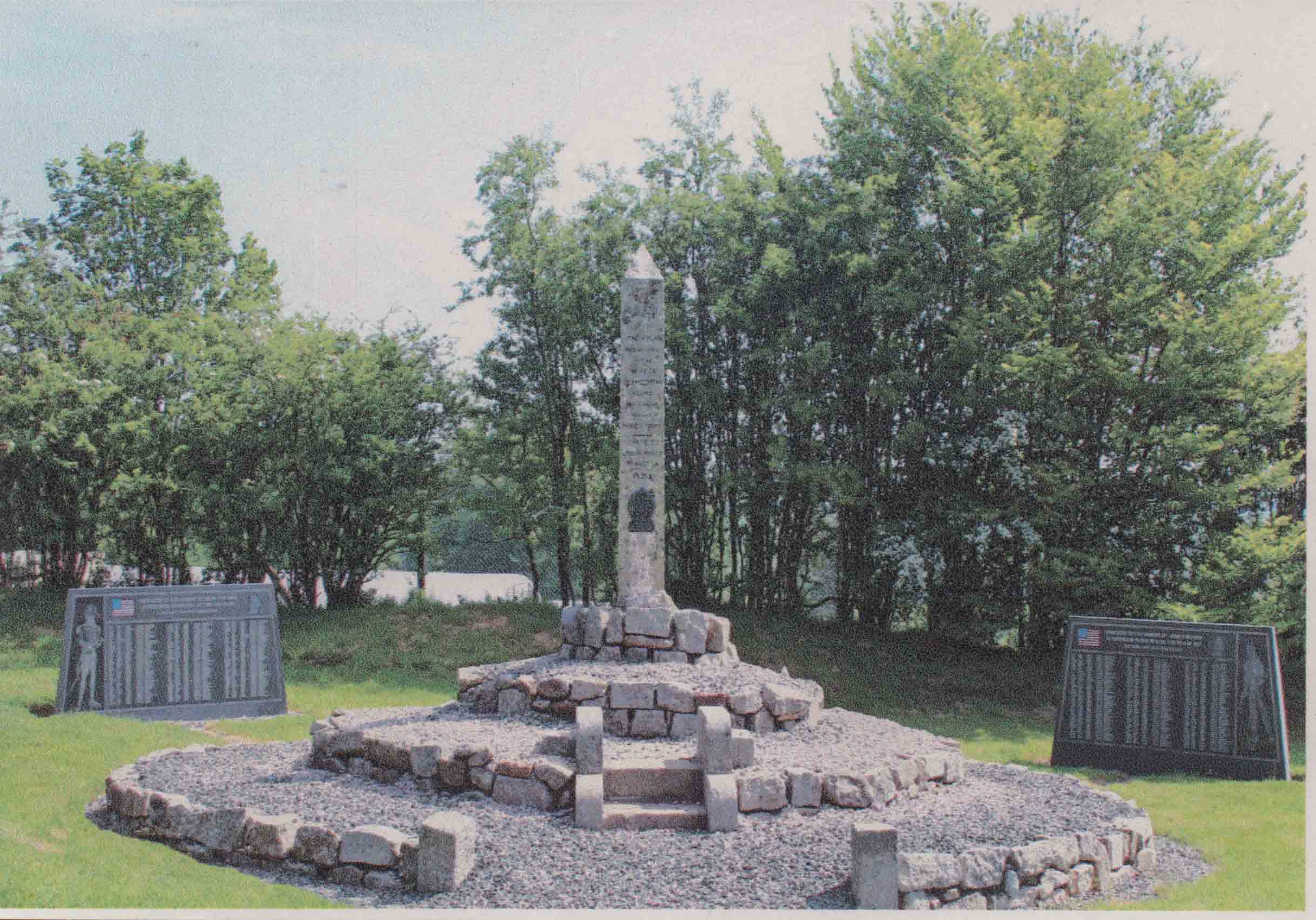
MonumentThe isolated burial of 271 prisoners of war from the War of 1812. The cemetery has an obelisk honoring the American POWs, and in 1987, the Daughters of 1812 presented the Prison with a Star and Anchor emblem, which was fixed to it. Two memorial stones stand on each side of the obelisk, listing the names of the men buried in the field, added in 2002. In addition to the two stones, there is a flag pole.
Dartmoor prison first opened its doors in 1809 to hold prisoners of the Napoleonic Wars and later American prisoners from the War of 1812. On April 3, 1813, the first part of American prisoners of War arrived at the prison: 250 men who were mostly merchant sailors. The accommodations were dire; the prisoners received one meal a day, and disease spread rapidly.
That first 4th of July in the prison, the prisoners had somehow procured two American flags and celebrated Independence Day. The captain of the guard became annoyed and immediately ordered the troops into the yard to confiscate the flags, which resulted in a quarrel in which the troops opened fire on the inmates, wounding two of them.
On July 10th, an altercation occurred in the prison yard between the American and French prisoners, but the night curfew stopped the situation from escalating any further. However, when the Americans began arriving in the yard the next morning, they were faced with French prisoners armed with knives and clubs. The French effectively sealed off the entrance to the yard, thus trapping about 120 Americans and preventing any reinforcements from coming to their aid. The battle resulted in many injuries to the unarmed Americans and was only stopped when a detachment of soldiers could intervene. The result was segregation of the Americans and French prisoners.
The number of American dead rose significantly with the arrival of a smallpox outbreak, which led to many deaths, as well as only being issued half rations and their lack of clothing causing prisoners to freeze to death.
In February of 1914, the prisoners began to receive an allowance of a penny and a half a day and were given the freedom of the entire depot, thus enabling them to attend the market and buy or barter with the French.
In April, the French soldiers began being repatriated to France. Many of the French were employed at the depot in various jobs, now leaving opportunities for employment. Around 100 Americans were given jobs earning sixpence a day as well as opportunities to smuggle in various goods. Prison conditions began to improve.
On December 29th, news reached Princetown that a peace treaty between Britain and America had been signed in Ghent and it was to be taken to the U.S. for ratification. By March, the peace treaty had been ratified and was heading back to England.
Just as the light of freedom was appearing at the end of the tunnel, the American prisoners were to witness one final act of cruelty. On April 6, 1915, after an incident with Americans playing football and the ball going over the prison wall numerous times, the Captain of the guard found a hole in the wall and ordered the guards along the walls and to sound the alarm bells. The prison yard became full of prisoners trying to see what the commotion was about. The Captain of the guard ordered his men into the inner square, to take battle formation, and to fix bayonets. The prisoners were ordered back to their cells and the soldiers to charge. Many prisoners scattered to all corners of the yard, most fleeing to the safety of their respective prisons. Some Americans held their ground, and the order to open fire was given. Several volleys of shots were sent into the mass of prisoners, and the soldiers continued firing upon them. This day became known as the Dartmoor Massacre, and it left seven dead, six men with amputated limbs due to injuries, and fifty-three wounded.
Shortly after the incident, prisoners began to be shipped out and taken back to the States. Many men were without shoes, and as their final punishment, they were forced to march the sixteen miles barefoot to Plymouth.
In the 1860s, the prison began excavating the grounds in which many of the prisoners of war had been buried, which led to the decision to create two separate cemeteries, one for American POWs and another for the French.
Monument Text:
The Obelisk reads:
In memory of the American Prisoners of War who died between the years 1809 to 1814 and are buried here - Dulce et decorum est pro patria mori.
English translation of Latin:
It is sweet and honorable to die for one's country.
The two stones list the names and this text:
Dedicated to the memory of those who died
at Dartmoor Prison during the War of 1812
...You have not been forgotten...
Commemorates:
Units:
U.S. Merchant Marine
United States Merchant Marine
United States Navy
Wars:
War of 1812
Other images :